The Federal Communications Commission adopted a Report and Order today that updated regulatory requirements needed to provide broadband services on aircraft. In short, the commission has designated Earth Stations Aboard Aircraft -- the broadband modules placed on the exterior of aircraft -- as a licensed application and established a set regulatory process for future providers. What this means is that airlines will be able to select FCC-approved systems, verify that systems don't interfere with aircraft instruments, and obtain FAA approval in about half the time it takes now. The new FCC guidelines should make it easier for smaller airlines to install WiFi on their jets, allowing them to catch up to legacy carriers with nearly fleetwide internet access. This news might also be a mixed blessing for frequent flyers, some of whom see flying as the last bastion of peace in an otherwise connected world.
CAIRO (AP) ? Egypt's Islamist president used his first address before the newly convened upper house of parliament on Saturday to warn against any unrest that could harm the country's battered economy, as he renewed calls for the opposition to join in a national dialogue.
In the nationally televised speech, Mohammed Morsi said the nation's entire efforts should be focused on "production, work, seriousness and effort" now that a new constitution came into effect this week. He blamed protests and violence the past month for causing further damage to an economy already deteriorating from the turmoil since the fall of autocrat Hosni Mubarak early last year.
In an alarm bell over the economy, the central bank announced soon after Morsi's speech that foreign currency reserves ? which have been bleeding away for nearly two years ? are at a "critical" level, the minimum needed to cover foreign debt payments and buy strategic imports.
Morsi's strongly worded address to lawmakers appeared aimed at sending a message to the mainly liberal and secular opposition not to engage in any new protests, depicting unrest as a threat to the priority of rebuilding.
All sides must "realize the needs of the moment" and work only through "mature democracy while avoiding violence," Morsi told the 270-member upper house, or Shura Council. "We condemn and reject all forms of violence by individuals, groups, institutions and even from the nation and its government. This is completely rejected."
He appeared to chide the opposition for not working with him.
"We all know the interests of the nation," he said. "Would any of us be happy if the nation goes bankrupt? I don't doubt anyone's intentions. But can anyone here be happy if the nation is exposed to economic weakness?"
The mainly liberal and secular opposition accuses Morsi of concentrating all power on the Muslim Brotherhood, from which he hails, and other Islamists and steamrolling any alternative voices.
The main opposition groups have refused to join a national dialogue convened by Morsi, saying past talks have brought no compromise. They also stayed out of the president's appointments last week of a few opposition figures to the overwhelmingly Islamist Shura Council, calling the move tokenism.
The bitterness between the two sides was inflamed by the crisis of the past month leading up to the referendum that passed the new constitution. Mass street rallies were held by both the opposition trying to stop the charter and by Morsi's Islamist supporters determined to push it to victory. Clashes that erupted left 10 dead. The charter was approved by 64 percent, but with a low turnout of around 33 percent. Civil society groups and the opposition also point to incidents of fraud in the vote they say have not been properly investigated.
Opponents fear the new charter will consecrate the Islamists' power. The document allows for a stronger implementation of Islamic law, or Shariah, than in the past and has provisions that could limit civil rights and freedoms of minorities.
Morsi has depicted his national dialogue as a chance for all factions to have a voice in planning the next steps and drawing up key legislation to put before the upper house, including a law organizing parliamentary elections. So far, mainly Islamists and only a few small opposition parties are participating.
Liberal former lawmaker Amr Hamzawi said the president's speech offered no new insights and failed to acknowledge significant opposition to the Islamist-drafted constitution. Hamzawi was among those who walked out in protest of the Islamists' handling of the draft process earlier this year.
"We need binding mechanisms to amend the flawed constitution, guarantee that the legislative role of the upper house of parliament will be temporary and to ensure fair elections," he said. "We will not enter into fraud elections each and every time."
Morsi's address aimed to set the tone as the Shura Council begins work on a slate of new laws. The upper house normally has few powers but it will now serve as the law-making body until a new lower house is chosen in national elections expected within a few months. Two thirds of the Shura Council members were elected in voting last winter, but few Egyptians bothered to vote, and Islamist allies of Morsi swept the chamber.
The ultraconservative Salafi al-Nour Party, the second strongest party after the Brotherhood's political wing, suffered a blow this week when its founder and chief Emad Abdel-Ghafour resigned to start a new party, Al-Watan. He took with him around 150 members, including many who were elected to office. The fracturing of the party may bolster the Brotherhood in the coming elections.
In his speech, Morsi repeatedly said it was time to return to "production" and "work." But he did not give details on an overall economic program, including crucial questions like how the government will tackle a crippling budget deficit or carry out expected tax hikes or reductions of subsidies.
The impending austerity measures are major concerns in a country where some 40 percent of the 85 million population live near or below the poverty line of surviving on $2 a day. Morsi's government has requested a $4.8 billion loan from the International Monetary Fund to bridge the budget deficit, but talks are on hold after the government reversed plans for tax hikes this month.
Instead, Morsi denounced those who he said were spreading panic about Egypt's economy, saying the country will "not go bankrupt." He underlined that banks were healthy, after a rush to buy dollars the past week over fears of devaluation of the Egyptian pound.
"Those who talk about bankruptcy, they are the ones who are bankrupt. Egypt will never be bankrupt and will not kneel, God willing," he said to a round of applause.
He directly blamed the past month's violence for Standard & Poor's downgrading this week of Egypt's long-term credit rating one level this week to B-, six steps below investment grade.
Morsi presented the country's foreign currency reserves, currently at $15 billion, as up slightly from last year, though he acknowledged they were still down dramatically from around $36 billion in 2010.
After last year's anti-Mubarak uprising, foreign investment and tourism ? one of the country's biggest money makers ? dried up. With fewer dollars coming in, the central bank has been spending reserves furiously to prop up the currency and pay for key imports. The slight uptick in reserves from last year is mainly due to hundreds of millions of dollars provided by the Gulf nation of Qatar.
In its statement Saturday, the central bank announced the introduction of a new auction system for banks buying and selling U.S. dollars, urging citizens to "ration usage" of foreign currency in favor of the Egyptian pound.
Amr Adly, who heads the Social and Economic Justice Unit at the Egyptian Initiative for Personal Rights, said Morsi's speech failed to outline a real economic recovery plan.
"We need to know the reality of the economic situation and have an idea of the measures that will be taken to address this situation," Adly said. "We are not bankrupt yet because we can still service the debt, but we are on the verge of bankruptcy."
___
AP writer Mariam Rizk contributed to this report from Cairo
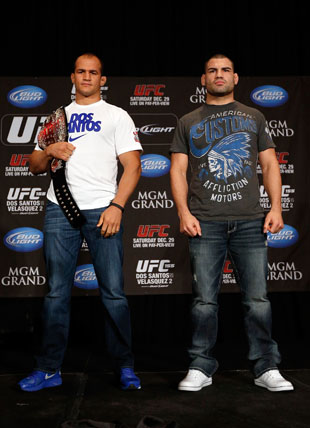
UFC 155 is only a day away. It's time for picks from Yahoo! Sports' columnist Kevin Iole, Cagewriter editor Maggie Hendricks, and Cagereaders who posted their picks on Facebook.
Kevin Iole: Junior dos Santos W5 Cain Velasquez -- I can't believe I'm picking against Velasquez. To me, he is in many ways the perfect heavyweight, with great conditioning, great wrestling and tremendous power. But how do we ignore what dos Santos has done? Much was made of Velasquez's knee injury before their first fight, but what isn't as well known is that Junior had a bad leg, too, and couldn't do much. It's going to be a dogfight, but I think Junior finds a way to pull it out.
Maggie Hendricks: Cain Velasquez W5 Junior dos Santos -- Velasquez was injured in his last bout with JDS. With a healthy knee, he'll get to use his wrestling to control and beat on JDS for five rounds.
Cagereaders: Couldn't ask for a better way to end the year than this rematch. This will last longer than the first but not by much. I'm picking Cigano by KO R1. Cain has amazing wrestling and ground and pound. However, I think Junior is the guy that has his number and things won't go as planned for Cain. Velasquez will come out more aggressive than the first fight and that will spell the end. Junior will rock him with some brutal counters causing Cain to shoot in for the take down. Junior will stuff the attempt and finish the fight with an uppercut around 3 minutes into the first. -- Jackson Torres
__
Kevin Iole: Joe Lauzon W3 Jim Miller -- Definitely will be the Fight of the Night in my opinion (is there any other kind of fight for Lauzon?) I don't think Joe will be able to submit Jim, but he is so active and works so hard I think he'll pile up the points to win.
Maggie Hendricks: Joe Lauzon Sub2 Jim Miller -- Lauzon's submission game is tough to beat. He will need to avoid Miller's well-rounded game, but can do it.
Cagereaders: My two favorite 155 pound fighters. When I saw Miller step in for Maynard, my heart sank. I'm going to see one them lose, and it looks to be J-Lau. Miller matches up really well for Lauzon's style. He has power in his punches and solid wrestling, backed up with a serious ground game and outstanding cardio. Joe has a killer instinct and a more dangerous ground game. Still, I like Miller taking this fought by a UD. -- Tom Hogan
--
Kevin Iole: Tim Boetsch W3 Costas Philippou -- Boetsch will grind out a victory by controlling the distance and limiting Philippou's power
Maggie Hendricks: Tim Boetsch W3 Costa Phillippou -- Ditto on what Kevin said. Boetsch won't make it a thrilling fight, but it will be a convincing win.
Cagereaders: Boetsch over Phillipou by 3rd Round TKO -- I think this fight will be back to forth, I have counted out Tim Boetsch in many fights just to be shocked, from the poor decision in the Lombard fight, to the amazing knock out of Okami, I think Phillipou gets the better of him early in the fight, while Boetsch owns the latter part of the fight, this could easily be fight of the night and if it does go decision, it will be close, but I see Phillipou gassing late and Boetsch taking advantage. -- Daniel Ryan
--
Kevin Iole: Alan Belcher TKO2 Yushin Okami -- This outcome would have been unthinkable a year ago, but Belcher improves tremendously each time out and is now one of the world's most complete fighters.
Maggie Hendricks: Alan Belcher W3 Yushin Okami -- With title shot hopes hanging over him, Belcher has good reason to fight a smart game and come out with a win over Okami.
Cagereaders: Yushin Okami will beat Alan Belcher by decision. Okami will go back to what made him successful before his fight with Anderson Silva. He will use his jab and height, keeping Belcher back, then take him down for ground and pound. This will continue for 3 full rounds and Okami will come out with the unanimous decision. -- Marcus Min
__
Kevin Iole: Chris Leben TKO3 Derek Brunson -- This is a big fight for Leben, and I think he knows it. I expect him to eventually catch Brunson with something big that will end it.
Maggie Hendricks: Derek Brunson W3 Chris Leben -- In his first fight after a long layoff, Leben will have a hard time dealing with a wrestler with power like Brunson.
Cagereaders: Derek Brunson should be able to defeat Chris Leben by decision because he has a great wrestling background and Chris Leben may not be in the best shape coming off a 13-month layoff. -- Edgar Diaz
WASHINGTON (AP) ? Senate leaders rushed to assemble a last-ditch agreement to avoid middle-class tax increases and possibly delay steep spending cuts in an urgent attempt to find common ground after weeks of postelection gridlock.
An impatient President Barack Obama pressed top lawmakers to cut a deal, even one that falls short of the ambitions he and congressional leaders may once have harbored for a bigger deficit reduction package. Without a resolution, he warned, "every American's paycheck will get a lot smaller."
"Congress can prevent it from happening, if they act now," he said in his weekly Saturday radio and internet address.
Following a White House meeting Friday among Obama and congressional leaders, aides to Senate Republican leader Mitch McConnell of Kentucky and Senate Majority Leader Harry Reid, D-Nev., began racing against the clock for a bipartisan bargain. The leaders could present legislation to senators as early as Sunday, with a vote possible on Sunday or Monday.
The guest list for the White House meeting included Reid, McConnell, House Speaker John Boehner, R-Ohio, and House Democratic leader Nancy Pelosi, D-Calif. But the key players were clearly Reid and McConnell, both of whom stayed behind briefly at the White House and huddled with their staffs and Obama's top legislative aide, Rob Nabors, in the West Wing Cabinet Room just outside the Oval Office.
Neither side expected compromise to be easy. However, McConnell and Reid voiced unexpected optimism that they could work toward a deal that could win support in both their camps.
Warned Reid: "Whatever we come up with is going to be imperfect."
Looking to add pressure on negotiators, Obama said that absent a compromise he expects Reid to put legislation on the floor to prevent tax increases on the middle class and extend unemployment benefits ? an implicit challenge to Republicans to dare to vote against what polls show is popular.
Speaking for Republicans in a Saturday radio address, Sen. Roy Blunt of Missouri sought to put the burden of a deal on Obama and Reid.
"We still can avoid going over the fiscal cliff if the president and the Democrat-controlled Senate step forward this week and work with Republicans to solve this problem and solve it now," he said.
Whatever manages to pass in the Senate, with its Democratic majority, would then face a second test in the Republican-controlled House.
Boehner, a Republican speaker who has struggled recently with anti-tax rebels inside his own party, said through an aide that he would await the results of the talks between the Senate and White House. A House vote could come as late as Wednesday, the final full day before a new Congress takes office.
Officials said there was a general understanding that any agreement would block scheduled income tax increases for middle-class earners while letting rates rise at upper-income levels.
Obama was sticking to his campaign call for increases above $250,000 in annual income, even though in recent negotiations he said he could accept $400,000.
The two sides also confronted a divide over estate taxes. Obama favors a higher tax than is currently in effect, but one senior Republican, Sen. Jon Kyl of Arizona, said he's "totally dead set" against it. Speaking of fellow GOP lawmakers, he said they harbor more opposition to an increase in the estate tax than to letting taxes on income and investments rise at upper levels.
But the estate tax was more likely to be used as a possible bargaining chip that Democrats could give away in exchange for higher rates for top earners and other Obama priorities.
Obama and Democrats want to prevent the expiration of unemployment benefits for about 2 million long-term jobless men and women, and there is widespread sentiment in both parties to shelter doctors from a 27 percent cut in Medicare fees.
Also likely to be included in the negotiations are taxes on dividends and capital gains, both of which are scheduled to rise with the new year. Also the alternative minimum tax, which, if left unchanged, could hit an estimated 28 million households for the first time and mean an average increase of more than $3,000.
The White House has shown increased concern about a possible doubling of milk prices if a farm bill is not passed in the next few days, although it is not clear whether that issue too might be included in the talks.
One Republican who was briefed on the White House meeting said Boehner made it clear he would leave in place spending cuts scheduled to take effect unless alternative savings were included in any compromise to offset them. In previous White House proposals, Obama has suggested finding enough cuts in government spending to put off the steeper cuts for up to six months.
Obama, speaking to reporters following his meeting with the congressional leaders, faulted a system that left crucial decisions to the last minute, a way of governing that he said the public finds "mindboggling."
"Outside of Washington nobody understands how it is that this seems to be a repeat pattern, over and over again," he said.
Still, Obama himself is part of the negotiating process, and his meeting with all four top leaders Friday was the first since Nov. 16. A phone call he placed Wednesday night to McConnell was the first the Republican leader had received from a Democrat on the fiscal talks since Thanksgiving.
Looking to add pressure on negotiators, Obama said he expects Reid to put legislation on the floor to prevent tax increases on the middle class and extend unemployment benefits ? an implicit challenge to Republicans to dare to vote against what polls show is popular.
The start of negotiations in the Senate marked a new endgame for discussions that have moved in fits and starts since the November election.
Boehner refused for weeks to accept any rate increases, and simultaneously accused Obama of skimping on the spending cuts he would support as part of a balanced deal to reduce deficits, remove the threat of spending cuts and prevent the across-the-board tax cuts.
Last week, the Ohio Republican presented a Plan B measure that would have let rates rise on million-dollar earners, well above Obama's latest offer for a $400,000 threshold.
Facing defeat, Boehner scrapped plans for a vote, leaving the economy on track for the cliff that political leaders in both parties had said they could avoid.
___
Associated Press writers Alan Fram and Andrew Taylor contributed to this report.
Christmas may be over and you?re feeling a bit flat, so we have come up with some fantastic things to do and places to go with your baby, toddler and pre-schooler this weekend. Just click on one of the selected local events below to see more information or click here to go to our Local Activities Calendar.
Bath On Ice: Bath On Ice? Bath?s new festive ice rink.? Bath on Ice is open until Sunday 6th January 2013. With the stunning Royal Crescent as your backdrop you will be able to take to the ice in the spectacular surroundings of Royal Victoria Park.
Stockeld Park:?Harrogate, York. Come and visit the Enchanted Forest, Ice rink, Giant snowflake maze, experience Nordic skiing, visit our magical gift shop and join us for some home cooked locally sourced food in our licensed cafe.
Too Many Penguins??Sutton and Merton, Wandsworth. How many penguins are too many penguins? Mr Polaro thinks one is more than enough, thank you very much! But Penguina has other ideas?she wants someone to play with. Just one friend?well, maybe two?or three?Squeeze into this fun theatrical experience and find out just how many penguins we can get into one space. It might get crowded, but we promise that the arrival of the penguins will entertain and delight!
The Lost Present:?Bristol. It?s a busy day in the Number One Lost Present Department. It?s Christmas-time and lots of presents have gone astray. Vic and Ed need to do some detective work? and FAST? to find a home for all the lost presents before it?s too late.
A botched software update to networking gear caused one of GitHub's all-time worst outages last weekend, the second major disruption that customers of the the popular social coding platform have suffered through in the past several weeks.
2 new species of orchid found in CubaPublic release date: 27-Dec-2012 [ | E-mail | Share ]
Contact: SINC info@agenciasinc.es 34-914-251-820 FECYT - Spanish Foundation for Science and Technology
Researchers from the University of Vigo, in collaboration with the Environmental Services Unit at the Alejandro de Humboldt National Park (Cuba), have discovered two new species of Caribbean orchid.
The Caribbean islands have been natural laboratories and a source of inspiration for biologists for over two centuries now. Suffice to say that the studies by Charles Darwin and Alfred Russel Wallace in the tropical archipelagos contributed to the emergence of the theory of evolution.
In this case, a Spanish research team from the University of Vigo has discovered two new species belonging to the orchid family (Orchidaceae: Laeliinae) in Cuba. They have been called Tetramicra riparia and Encyclia navarroi. The two plants were found in the eastern and western zones of the island respectively.
"The first species described, Encyclia navarroi, is an orchid with considerably large flowers. A year later we discovered the Tetramicra riparia species, with very small flowers. The latter is so named because it grows on the banks of stony streams in the mountains of Baracoa, one of the rainiest and least explored areas in Cuba", as ngel Vale explained to SINC. Vale is a researcher at the University of Vigo and co-author of the studies published by the journals Systematic Botany and Annales Botanici Fennici.
Darwin was very much drawn to the orchid family, and used it to propose certain hypotheses about the importance of the relations between flowers and pollinators for biodiversity. Between 25,000 and 30,000 species of these plants are estimated to exist. However, the mechanisms that explain this amazing variety are only now being discovered.
"We could highlight their extraordinary capacity to interact with different types of pollinators. Contrary to most plants, many orchids do not produce nectar or other substances to compensate insects and birds that visit them", explained the researcher.
Orchids' deceit pollination
Despite this, floral visitors are attracted by orchids' colours and shapes, which enables the plants' sexual reproduction. This is known as deceit pollination.
The University of Vigo Plant Ecology and Evolution research team, which Vale belongs to, is studying the ecological and evolutionary consequences of deceit pollination in orchids that are endemic to the Greater Antilles: Cuba, Jamaica, Hispaniola and Puerto Rico. One of the mysteries they aim to solve is if the deceit orchids have a greater taxonomic and genetic diversity than other nectar-producing species.
Vale and his team are drawing up studies in the Antilles not only to reconstruct the evolutionary history of orchids but also to analyse the effect of pollinators in the reproduction of plants, and how this interaction has modelled the colourful aspect of these Caribbean flowers.
"Despite the fact that T. riparia's flowers have a complete central petal, just like other species that make up a subgenre endemic to Cuba; the way they grow is very similar to a more widespread group that seems to have diverged on the neighbouring island of Hispaniola. Our work provides molecular evidence of the greater relationship of T. riparia with these species on the neighbouring island. This is in consonance with the geological history of the Caribbean islands, according to which the eastern end of Cuba was in close contact with that land", pointed out Vale.
Scientists are currently trying to estimate how many millions of years ago this and other Caribbean species saw the light of day. This will enable them to test whether the ancestor of this species was already in Cuba, or if on the contrary, it evolved from an ancestor that colonised the island from neighbouring archipelagos.
"Just as with most orchids, which offer no compensation to their pollinators, Encyclia navarroi and Tetramicra riparia receive very few visits from bees. This is one of the basic reasons that guarantee the survival of these plants, and also help protect the populations of their pollinators", explained the scientist.
###
References:
ngel Vale, Danny Rojas, Yosvanis Acanda, Natividad L. Snchez-Abad y Luis Navarro. "A New Species of Tetramicra (Orchidaceae: Laeliinae) from Baracoa, Eastern Cuba" Systematic Botany 37(4): 883-892, octubre-diciembre 2012. DOI 10.1600/036364412X656491.
ngel Vale, Danny Rojas. "Encyclia navarroi (Orchidaceae), a new species from Cuba" Annales Botanici Fennici 49: 83 86, 26 de abril de 2012.
To contact the researcher:
Angel Vale
Dpto. de Biologa Vegetal y Ciencias del Suelo
Facultad de Ciencias de la Universidad de Vigo
Tel: (34) 986 812628 / mobile: (34) 663 497158
angel.vale@uvigo.es / vitexaggelos@yahoo.com
http://webs.uvigo.es/plantecology
[ | E-mail | Share ]
?
AAAS and EurekAlert! are not responsible for the accuracy of news releases posted to EurekAlert! by contributing institutions or for the use of any information through the EurekAlert! system.
2 new species of orchid found in CubaPublic release date: 27-Dec-2012 [ | E-mail | Share ]
Contact: SINC info@agenciasinc.es 34-914-251-820 FECYT - Spanish Foundation for Science and Technology
Researchers from the University of Vigo, in collaboration with the Environmental Services Unit at the Alejandro de Humboldt National Park (Cuba), have discovered two new species of Caribbean orchid.
The Caribbean islands have been natural laboratories and a source of inspiration for biologists for over two centuries now. Suffice to say that the studies by Charles Darwin and Alfred Russel Wallace in the tropical archipelagos contributed to the emergence of the theory of evolution.
In this case, a Spanish research team from the University of Vigo has discovered two new species belonging to the orchid family (Orchidaceae: Laeliinae) in Cuba. They have been called Tetramicra riparia and Encyclia navarroi. The two plants were found in the eastern and western zones of the island respectively.
"The first species described, Encyclia navarroi, is an orchid with considerably large flowers. A year later we discovered the Tetramicra riparia species, with very small flowers. The latter is so named because it grows on the banks of stony streams in the mountains of Baracoa, one of the rainiest and least explored areas in Cuba", as ngel Vale explained to SINC. Vale is a researcher at the University of Vigo and co-author of the studies published by the journals Systematic Botany and Annales Botanici Fennici.
Darwin was very much drawn to the orchid family, and used it to propose certain hypotheses about the importance of the relations between flowers and pollinators for biodiversity. Between 25,000 and 30,000 species of these plants are estimated to exist. However, the mechanisms that explain this amazing variety are only now being discovered.
"We could highlight their extraordinary capacity to interact with different types of pollinators. Contrary to most plants, many orchids do not produce nectar or other substances to compensate insects and birds that visit them", explained the researcher.
Orchids' deceit pollination
Despite this, floral visitors are attracted by orchids' colours and shapes, which enables the plants' sexual reproduction. This is known as deceit pollination.
The University of Vigo Plant Ecology and Evolution research team, which Vale belongs to, is studying the ecological and evolutionary consequences of deceit pollination in orchids that are endemic to the Greater Antilles: Cuba, Jamaica, Hispaniola and Puerto Rico. One of the mysteries they aim to solve is if the deceit orchids have a greater taxonomic and genetic diversity than other nectar-producing species.
Vale and his team are drawing up studies in the Antilles not only to reconstruct the evolutionary history of orchids but also to analyse the effect of pollinators in the reproduction of plants, and how this interaction has modelled the colourful aspect of these Caribbean flowers.
"Despite the fact that T. riparia's flowers have a complete central petal, just like other species that make up a subgenre endemic to Cuba; the way they grow is very similar to a more widespread group that seems to have diverged on the neighbouring island of Hispaniola. Our work provides molecular evidence of the greater relationship of T. riparia with these species on the neighbouring island. This is in consonance with the geological history of the Caribbean islands, according to which the eastern end of Cuba was in close contact with that land", pointed out Vale.
Scientists are currently trying to estimate how many millions of years ago this and other Caribbean species saw the light of day. This will enable them to test whether the ancestor of this species was already in Cuba, or if on the contrary, it evolved from an ancestor that colonised the island from neighbouring archipelagos.
"Just as with most orchids, which offer no compensation to their pollinators, Encyclia navarroi and Tetramicra riparia receive very few visits from bees. This is one of the basic reasons that guarantee the survival of these plants, and also help protect the populations of their pollinators", explained the scientist.
###
References:
ngel Vale, Danny Rojas, Yosvanis Acanda, Natividad L. Snchez-Abad y Luis Navarro. "A New Species of Tetramicra (Orchidaceae: Laeliinae) from Baracoa, Eastern Cuba" Systematic Botany 37(4): 883-892, octubre-diciembre 2012. DOI 10.1600/036364412X656491.
ngel Vale, Danny Rojas. "Encyclia navarroi (Orchidaceae), a new species from Cuba" Annales Botanici Fennici 49: 83 86, 26 de abril de 2012.
To contact the researcher:
Angel Vale
Dpto. de Biologa Vegetal y Ciencias del Suelo
Facultad de Ciencias de la Universidad de Vigo
Tel: (34) 986 812628 / mobile: (34) 663 497158
angel.vale@uvigo.es / vitexaggelos@yahoo.com
http://webs.uvigo.es/plantecology
[ | E-mail | Share ]
?
AAAS and EurekAlert! are not responsible for the accuracy of news releases posted to EurekAlert! by contributing institutions or for the use of any information through the EurekAlert! system.
After a tenure that began with bold pledges but wound down with defensive maneuvers, Lisa P. Jackson is resigning as administrator of the Environmental Protection Agency, John M. Broder reports. Her departure comes as many are questioning President Obama?s commitment to dealing with climate change and other environmental problems.
Feeler: This touch screen from Tactus Technology lets users feel the buttons on a flat interface.
One of the most interesting threads of innovation in computing over the past 12 months can be traced back to the preceding year. In 2011, Apple?s virtual assistant Siri showed how software and computers could be more than just tools?something closer to collaborators. In 2012, Apple?s competitors extended that notion in ways that could shape all kinds of technology for years to come.
The company that first created Siri, SRI, created a similar system capable of working as a bank teller. Meanwhile, Google launched two alternative versions of a mobile assistant. Google Now, built into newer Android smartphones and tablets, works like a search engine in reverse?offering up data such as weather forecasts, traffic reports, or transit times when it thinks a person needs that information. A similar app, called Field Trip, is intended for use when exploring a new city; it notifies users about nearby attractions, well-reviewed businesses, and events. Both are currently free from ads but show obvious potential for including location-based offers. Just this month, a slick app closely modeled on Google Now launched for the iPhone.
One of Microsoft?s leading researchers, Eric Horvitz, contributed to the trend with a browser that can identify and explore landmark events in a person?s past. However, software is still a long way from matching human abilities to process, filter, and construct information. One university research project showed as much, in September, by making a virtual assistant that draws on crowdsourcing as well as AI software to carry on intelligent conversations. Just a few months later, one startup announced that such an assistant would soon be available as a product.
All those advances?Siri included?owe much to improvements in machine learning, a branch of artificial intelligence concerned with enabling software to consume data and figure things out for itself.
One result of such an improvement is that Google?s English-language speech recognition got 20 percent more accurate this year, thanks to an upgrade to the company?s machine learning software that?s soon to be rolled out for other languages. Engineers moved from purely statistics-based models to so-called artificial neural networks, which are loosely modeled on biological neurons. The same machine learning technology powered a remarkable demonstration by Google researchers of software that learned to recognize cats from watching YouTube videos and a demonstration by Microsoft in which spoken English was translated into spoken Chinese in real time. (For those for whom such work raises questions about reality, here?s how to test whether the world around you is a computer simulation.)
Touch and Feel To become close collaborators, computers need to be able to understand us, a more likely prospect thanks to this year?s improvements in the interfaces we use to communicate with software and machines.
Some researchers demonstrated ways to make conventional touch screens more expressive. Startup Qeexos showed off hardware and software upgrades that enable a touch screen to distinguish fingers from knuckles, while another young company, Tactus, invented a shape-shifting screen capable of flipping between a flat surface and one with raised buttons.
Companies large and small also looked beyond the touch screen, moving us toward a time when it will become normal to control a computer or mobile device using gestures. Startup Leap Motion wowed many?this writer included?with its $70 gesture controller. Intel showed off laptops with similar technology inside, while Microsoft readied a version of its Kinect gaming accessory for PCs and other home computers.
The most radical new vision of all for interacting with computing came from Google: a pair of eyeglass frames holding a small display. A slick promotional video for the product, known as Google Glass, gave hints about what it might allow, and Google?s founders were seen trying out the technology near TR?s San Francisco office, but even the company admitted it needed help from outside developers to find the best applications for it.
Better Building Blocks All the advances mentioned so far rested on improvements in hardware. Researchers continued developing faster, more powerful, and more efficient hardware, with much focus on propping up Moore?s Law?the metronomic growth in the density of processors on computer chips that has continued for 50 years.
Progress in this area has relied on finding ways to carve finer features into chips, and in April, Intel launched the Ivy Bridge line, the first chips with details as small as 22 nanometers. Intel also led chip companies in launching a multibillion-dollar collaboration on ?extreme? ultraviolet technology, intended to ensure that the size of components keeps dropping further still.
Smaller-scale manufacturing techniques are crucial to hard-disk technology, too?and a breakthrough in self-assembly designs, announced last month, suggests a way forward. A more unusual chip technology story came from devotees of the virtual currency Bitcoin, who started designing custom chips to help them ?mine? digital cash faster.
But Intel?and Moore?s Law?were mentioned rarely in relation to smartphones and tablets, most of which are powered by more efficient processors based on designs from U.K. chip designer ARM. The company?s CEO told me last month that he considers Moore?s Law irrelevant and that ARM plans to compete in other areas of computing. Its technology could help out companies such as Facebook, which in 2012 released figures on the energy consumed by the vast data centers that serve its one billion users.
A wilder bet on the future of computing hardware was placed by Amazon founder Jeff Bezos and the CIA. They both invested in a Canadian company that may (or may not) have figured out how to tap weird quantum-mechanical effects to analyze data faster than a conventional computer can.
Generational Shift The biggest stories from computing giants Apple and Microsoft also involved ways of making computers easier for us to understand and relate to. Apple, whose late founder Steve Jobs had dismissed tablets smaller than 10 inches on the diagonal as ?tweeners ? dead on arrival,? backtracked and copied rivals such as Google by launching just such a tablet, the iPad Mini. The new device was well received by reviewers: the reduced size and weight made it much easier to use without compromising on power, so it seemed more likely to become a person?s constant companion.
Microsoft?s own efforts in the field of human-computer relations came to the fore with the release of Windows 8, an effort to reimagine the operating system used by some 1.3 billion people and help the company regain influence in an industry now shaped more by mobile devices than by PCs.
Windows 8 for desktop and Windows 8 phone both received generally positive reviews from our writers. But features seemingly designed for a future era when every PC has a touch screen like a tablet caused some confusion, a feeling echoed by other reviewers and early upgraders.
Despite such carping, the executive in charge of Windows 8 product development told MIT Technology Review that data automatically collected from some users of the operating system suggests people are adjusting to its novel design features just fine. But as one of our bloggers pointed out, the arguments over Windows 8?s design are as much a reminder that all computer operating systems have their shortcomings as an indictment of Microsoft?s choices.
The coming year will be a test for many of the computing technologies that gained attention in 2012; we will certainly find out whether Microsoft?s grand experiment has been a success or a titanic flop.?
Russian President Vladimir Putin speaks during a news conference in Moscow, Russia, Thursday, Dec. 20, 2012. Putin says a draft bill banning U.S. adoptions of Russian children is a legitimate response to a new U.S. law that calls for sanctions on Russians deemed to be human rights violators. But he has not committed to signing it. (AP Photo/Alexander Zemlianichenko)
Russian President Vladimir Putin speaks during a news conference in Moscow, Russia, Thursday, Dec. 20, 2012. Putin says a draft bill banning U.S. adoptions of Russian children is a legitimate response to a new U.S. law that calls for sanctions on Russians deemed to be human rights violators. But he has not committed to signing it. (AP Photo/Alexander Zemlianichenko)
Russian President Vladimir Putin speaks during a news conference in Moscow, Russia, Thursday, Dec. 20, 2012. Putin says a draft bill banning U.S. adoptions of Russian children is a legitimate response to a new U.S. law that calls for sanctions on Russians deemed to be human rights violators. But he has not committed to signing it. (AP Photo/RIA Novosti, Alexei Nikolsky, Presidential Press Service)
Russian President Vladimir Putin speaks during a news conference in Moscow, Russia, Thursday, Dec. 20, 2012. Putin says a draft bill banning U.S. adoptions of Russian children is a legitimate response to a new U.S. law that calls for sanctions on Russians deemed to be human rights violators. But he has not committed to signing it. (AP Photo/Alexander Zemlianichenko)
Russian President Vladimir Putin speaks during a news conference in Moscow, Russia, Thursday, Dec. 20, 2012. Putin says a draft bill banning U.S. adoptions of Russian children is a legitimate response to a new U.S. law that calls for sanctions on Russians deemed to be human rights violators. But he has not committed to signing it. (AP Photo/Alexander Zemlianichenko)
Members of the media raise their hands to ask questions as Russian President Vladimir Putin gives a news conference in Moscow, Russia, Thursday, Dec. 20, 2012. Putin says a draft bill banning U.S. adoptions of Russian children is a legitimate response to a new U.S. law that calls for sanctions on Russians deemed to be human rights violators. But he has not committed to signing it. (AP Photo/Misha Japaridze)
MOSCOW (AP) ? Russia realizes changes in Syria are needed but is concerned that the push to unseat President Bashar Assad's regime could plunge the country even deeper into violence, Russian President Vladimir Putin said Thursday.
Putin's assessment came just a week after Russia's top envoy for Syria was quoted as saying Assad's forces were losing control of the country. Although the Foreign Ministry backpedaled on that statement, analysts have suggested for months that the Kremlin is resigned to losing its longtime ally.
At his annual hours-long news conference, Putin said Moscow stands for a settlement that would "prevent the country from breakup and an endless civil war. "Agreements based on a military victory can't be effective," he said.
Russia has repeatedly blocked international attempts to step up pressure on the Assad regime as it fights an increasingly strong armed opposition. That has brought substantial criticism of Russia as effectively supporting the regime, but Russia has said its stance isn't aimed at propping up Assad.
"We are not preoccupied that much with the fate of the Assad regime; we realize what's going on there and that the family has been in power for 40 years," Putin said. "Undoubtedly, there is a call for changes."
"We are worried about another thing: what happens next," he said. "We don't want to see the opposition come to power and start fighting the government that becomes the opposition, so that it goes on forever."
Russia wants "people to come to an agreement on how they will live further and how they will ensure their safety and their participation in governing the country and then start changing the current order based on those agreements."
When most people think of unionized workers, they picture a guy in a hard hat walking out of a factory. A more accurate picture might be of a second-grade teacher walking out of a classroom.
Public-sector union members such as teachers, firefighters and other government workers now make up more than half of total union membership in the United States, due mainly to steady declines among private sector union jobs.
The shift means that public-sector unions are increasingly taking on the mantle of representing the fight for broader worker?s rights???beyond just their membership base ? on issues as far-reaching as tax cuts and the fiscal cliff.
?I think we have to be advocating for more than just unions. I think we have to advocate for this whole concept of middle class,? said Dennis Van Roekel, president of the National Education Association, a union representing more than 3 million teachers and other education workers.
They?re also increasingly in the spotlight on more far-reaching union issues, such as the union-weakening ?right to work? legislation that passed last week in Michigan.
But at the same time, public-sector unions are defending themselves against charges that their salaries and benefits cost taxpayers too much money, and are a drain on scarce government resources.
?Fundamentally, in the public sector, the resentment to unions is about taxes,? said Henry Farber, an economics professor at Princeton University. ?In the private sector, it?s about international trade and about companies wanting higher profits.?
The efforts to weaken both public- and private-sector unions are expected to continue in coming months, as experts predict that those who oppose unions work to curb their power in other traditionally labor-friendly states.
About 14.8 million people, or 11.8 percent of U.S. workers, belonged to a union in 2011, according to the Bureau of Labor Statistics. Of that group, about 7.6 million were public-sector workers, while about 7.2 million worked for the private sector.
The ranks of private-sector unions have been decimated over the past few decades by losses in traditionally union-heavy industries like manufacturing. But union membership among government workers has held relatively steady.
About 37 percent of public-sector workers belonged to a union in 2011, compared with just 6.9 percent of private-sector workers.
Politicians who have taken on public-sector unions say the cost of providing government workers with the salaries, health benefits and pensions they were promised has simply become too high. Wisconsin Gov. Scott Walker, whose successful effort to curtail collective bargaining rights was met with fierce protests and even a recall effort, said he was motivated by state budget woes.
?I?m just trying to balance my budget,? Gov. Walker, a Republican, told The New York Times in 2011.
But others argue that these battles are really about curbing union clout and resources, and note that unions have traditionally been powerful Democratic allies at election time.
?The fight over right-to-work and collective bargaining is really, I think, designed to take away the power that public employees? unions have over the ballot box,? said Michael Hicks, director of the Center for Business and Economic Research at Ball State University.
Experts say there are legitimate concerns about how state governments will be able to pay for the benefits they have promised workers, especially as the population ages and retirees live longer.
Matthew Finkin, a law professor at the University of Illinois and an expert in labor issues, said that over the years a common tactic for keeping government workers happy while also balancing state budgets has been to offer longer-term benefits, such as health care for retirees, in lieu of perks that would be costly in the short-term, such as big salary bumps.
That also was an attractive option to politicians, he said, because chances were low that they would still be in office when the bill actually came due.
?It?s cheap for this legislature to let some other legislature 10 years from now worry about (it),? Finkin said ?They can just push these costs ? kick the can, as they say, down the road. Well, you can?t do that forever.?
The recession and weak recovery has been a severe blow to many state and local budgets, thanks to years of high unemployment and the housing bust. Meanwhile, some believe the gap between what governments have promised workers and what they actually have set aside has topped $1 trillion.
For the 2010 fiscal year, the Pew Research Center estimates that states have set aside about $757 billion less than they need for pension obligations, and about $627 billion less than they need for promised health benefits.
Joshua Rauh, a finance professor at Stanford University, argues that the gap could actually be around four times higher than what Pew estimates. He said that?s because many states use very optimistic models for forecasting their expected returns on investments.
Union advocates like Van Roekel, the president of the NEA, argue that the state governments got themselves in trouble by not setting aside enough money to pay for the things they promised. He argues workers have paid the share they agreed to and should?not be asked to do more.
?I think they have some legitimate problems that were created by not putting in what they should every year,? Van Roekel said. ?But that doesn?t mean (the problems) can be solved.?
But not everyone thinks the financial challenges facing state and local governments can be fixed without workers making a sacrifice. The most high-profile fights have come in states like Wisconsin, which passed legislation severely limiting union workers? bargaining rights, and Ohio, where similar legislation ended up being repealed by a public vote.
Those challenges, along with the anti-union legislation passed in Michigan last week, were backed by Republicans. But in Rhode Island, a Democratic general treasurer, Gina Raimondo, has led an effort to overhaul the state?s pension system. Several unions have challenged the changes in court.
Even some former union members have now become proponents of cutting union jobs and benefits in order to balance budgets.
Greg Goodnight spent six years as the president of the United Steelworkers Local 2958, following in the footsteps of his father, who had also spent years as president of a local union chapter.
Now that he?s the mayor of Kokomo, Ind., Goodnight finds himself on the other side of the bargaining table.
Since taking office in 2008, Goodnight said he has reduced personnel costs from about 78 percent of the city budget to about 64?percent of the budget that is funded by tax dollars. A big chunk of that has come from sharply cutting the number of city employees, from 521 to 436, and asking employees to pay more for things like health care. He froze his own salary at $74,000 as well.
Goodnight said the strict cutbacks were necessary to keep the city solvent. Kokomo is largely reliant on auto manufacturing and hit a peak unemployment rate of 20 percent in June of 2009.?
The Kokomo metropolitan area?s unemployment rate is now around 8 percent, and he said the city is on firm enough financial footing to have recently invested in two new fire stations, two new fire trucks and eight new police cars.
Still, Goodnight admits that cutting jobs and benefits was risky, especially during the bleakest economic times.
?If had to face re-election in that first 10-11 months in office, I probably would have gotten beat 80-20, but fortunately I had four years to address some of these things,? Goodnight said.
??Sure, some Christmas songs are worth a listen.??But others .. hoo boy, hear them once and you're diving for the extra-strength candy-cane-striped holiday Advil. Which doesn't exist, but should. A collector of more than 600 tacky holiday songs shares her favorites.
[unable to retrieve full-text content]Small ceramic indoor stoves do save fuel and cut down on eye-irritating smoke, a new study has found ? but they do not save children from pneumonia.
ATHENS, Greece (AP) ? Standard & Poor's ratings agency on Tuesday upgraded Greece's credit grade by 6 notches, yanking the debt-heavy country out of default but still keeping its devalued bonds in junk status.
The agency said the upgrade to B- ? the highest grade it has given Greece since June 2011 ? reflected its view that the other 16 European Union countries using the euro are determined to keep Greece inside the currency union.
It also gave Greece a stable outlook, meaning it is less likely to change its rating again soon.
"The stable outlook balances our view of eurozone member states' determination to support Greece's eurozone membership and the Greek government's commitment to a fiscal and structural adjustment against the economic and political challenges of doing so," the agency said in a statement.
An upgrade was expected since S&P had earlier this month temporarily lowered Greece's rating to the bottom of its scale ? 'selective default' ? because the country was buying back its own debt. The agency said that because the buyback did not force any investors to sell their bonds back ? which would have constituted a default ? it was raising the rating back up.
The bond buyback was successfully completed last week, and will reduce the country's debt by some ?20 billion ($26.4 billion).
The size of the upgrade suggests EU leaders are seeing some results in their effort to bring Greece's debt load back under control.
However, the credit rating is increasingly losing any market relevance because there are very few private sector investors still holding Greek bonds. After completing the buyback and receiving multiple bailout packages over three years, Greece now owes the bulk of its debt to fellow eurozone states, the IMF and the European Central Bank.
Greece's government bonds have been rated as non-investment grade ? or junk ? since 2010, when the country's finances imploded after Athens admitted it had severely underestimated its budget deficit.
For more than two and a half years, the country has depended on billions in rescue loans from its European partners and the International Monetary Fund. To secure the bailouts, Greece has implemented harsh austerity measures that slashed incomes, bled the health and welfare systems and drove thousands into deep poverty.
The cutbacks and repeated tax hikes are meant to reduce the deficit, but they also hurt the economy. Greece has been in a deep recession that has cut economic output by 20 percent over the past five years and brought unemployment to a record high of 26 percent ? with about 1,000 jobs lost every day since 2010.
Greece on Monday received a massive rescue loan installment worth ?34.3 billion, after completing the bond buyback in which it paid ?11.29 billion to cancel debt worth ?31.9 billion.
The government said Tuesday that deficit cutting efforts remained on target, with the January-November shortfall at ?12.9 billion, compared with ?21.5 billion for that period in 2011.
S&P's Greek rating is the highest among the three main agencies. Fitch has Greece rated at one notch above default, while Moody's still lists the country as being in default.
Although Greece is unable to finance itself on long-term bond markets, it maintains a presence in short-term debt markets through regular auctions.
On Tuesday, it raised ?1.3 billion ($1.71 billion) in a treasury bill auction at slightly lower interest rates compared with the last such sale five weeks ago.
The Public Debt Management Agency said the 13-week T-bills were sold at an interest rate of 4.11 percent, edging down from 4.2 percent rate last month.
S&P said that while bailout creditors assume that Athens will be able to return to bond markets by 2015, that access "remains subject to numerous domestic and external uncertainties."
Dec. 17, 2012 ? A remarkable observation by astronomers from the University of Southampton, Professor Phil Charles, Professor Malcolm Coe and postgraduate student Liz Bartlett, has appeared in The Astrophysical Journal.
The Southampton Physics and Astronomy team are part of a global collaboration -- with colleagues in Taiwan, South Africa, Poland, Australia and Italy -- that has revealed that bright X-ray flares in nearby galaxies, once assumed to indicate the presence of black holes, can in fact be produced by white dwarfs.
They made the discovery by detecting a dramatic, short-lived X-ray flare that was picked up by an X-ray telescope on the International Space Station.
Using optical telescopes in South Africa and Chile, the Southampton astronomers showed that the flare, called XRF111111 as it happened on 11 November, 2011, was located in the Small Magellanic Cloud. These Magellanic Clouds are between 160,000 and 200,000 light years away and are the nearest satellite galaxies to the Milky Way. They are visible to the naked eye from the Southern Hemisphere.
The flare from XRF111111 was so luminous that astronomers initially thought it was likely to be a black hole producing X-rays but further research by Phil and his team revealed that its X-ray temperature was so low that it had to be a white dwarf instead.
White dwarfs are very common, burnt-out cinders of normal stars like the Sun that are typically about one solar mass but are contained in a volume no bigger than Earth.
However, white dwarfs were not considered capable of producing such a huge X-ray flash but the optical observations in South Africa and Chile showed that the white dwarf was orbiting a hot B star -- a normal star about 10 times the mass of our Sun that is much hotter and brighter. This was something that had only been seen twice previously and both times with much lower X-ray luminosities.
Research by Professor Charles and his team revealed that material was probably collecting on the surface of the white dwarf from the B star and eventually underwent runaway thermonuclear burning that was seen on Earth as a nova explosion.
Professor Charles says: "Our observations show that the thermonuclear burning probably caused a shell of matter to be ejected from around the white dwarf and when the shell hit the hot wind of the B star it produced a huge shock leading to the X-ray flash that was seen on the International Space Station.
"We think that this incredible X-ray flash was not due to accretion onto a black hole but was instead due to a nova explosion on a white dwarf that took place close to a hot massive star. This was something that we, as astronomers, have never seen before.
"This surprising result shows that, in the right circumstances, white dwarfs are capable of mimicking black holes, the most luminous objects we know of."
Share this story on Facebook, Twitter, and Google:
Other social bookmarking and sharing tools:
Story Source:
The above story is reprinted from materials provided by University of Southampton, via AlphaGalileo.
Note: Materials may be edited for content and length. For further information, please contact the source cited above.
Journal Reference:
K. L. Li, Albert K. H. Kong, P. A. Charles, Ting-Ni Lu, E. S. Bartlett, M. J. Coe, V. McBride, A. Rajoelimanana, A. Udalski, N. Masetti, Thomas Franzen. A Luminous Be+ White Dwarf Supersoft Source in the Wing of the SMC: MAXI J0158-744. The Astrophysical Journal, 2012; 761 (2): 99 DOI: 10.1088/0004-637X/761/2/99
Note: If no author is given, the source is cited instead.
Disclaimer: Views expressed in this article do not necessarily reflect those of ScienceDaily or its staff.
NEW YORK, Dec. 13, 2012 ? On Deck ( www.ondeckcapital.com ), the technology-powered Main Street lender, announced today that seasoned marketing executive Andrea Gellert has been named to the company?s newly created position of Senior Vice President of Marketing.
Gellert brings more than fifteen years of marketing and client services experience geared towards the small to medium business market. Gellert joins On Deck during the company?s rapid growth, which has experienced a 100% uptick over the past 12 months. She will oversee all of the company?s marketing activities, including strategy for customer campaigns, advertising, direct marketing, social media and public relations.
Gellert joins On Deck from Group Commerce, where she held the position of Vice President of Client Services and Operations. She was responsible for client implementation and growth, merchant operations and customer service. Prior to that post, she spent 15 years at American Express, holding leadership positions in both the OPEN small business and Merchant Services divisions. In her most recent position as Vice President of Marketing for OPEN, Gellert spearheaded initiatives that greatly improved the customer experience, as measured by net promoter score and retention rates, and created the company?s first small business recognition platform. Gellert holds an undergraduate degree from Harvard College and an MBA from the Kellogg Graduate School of Management at Northwestern University.
?Today?s appointment of Andrea marks yet another critical growth milestone for On Deck, and we are thrilled to have her join our management team,? said Noah Breslow, chief executive officer, On Deck. ?Her extensive, direct experience with the small business market provides critical firepower as we build On Deck into the leading national brand serving the financing needs of Main Street America.?
On Deck is the leading technology platform that solves one of the biggest challenges facing the U.S. economy: how to effectively deliver capital to Main Street. On Deck evaluates the financial health of small businesses based on factors such as cash flow and business credit data, rather than the traditional benchmark of the personal credit score. The On Deck platform can identify creditworthy businesses where others cannot, and to date has delivered over $300 million to the underserved Main Street segment through a process that is substantially faster and easier than a traditional bank loan.
?On Deck is an innovative company that is successfully transforming the way small businesses access the capital they need to grow, which is in turn, is driving the economy forward,? said Gellert. ?I am excited by the opportunity to advance On Deck?s brand and to bring our message of accessibility and keen understanding of small business owners? needs to a national audience.?
Bitcasa has offered truly unlimited cloud storage for awhile, but only desktop users have had access to more than an HTML5 page. Now that there's native Infinite Drive apps for Android, Windows 8 and Windows RT, that dream of having access to everything, everywhere just got more tangible. The new apps stream media in a native player and offer two-way file access, no matter the size or quantity -- if your life's work is in the cloud, your Surface can see it. Android users can also link their camera app to Bitcasa to guarantee an instant photo backup, and any file is shareable with those who haven't signed up. We're promised both an iOS version and a finished Mac app in early January. The $10 monthly subscription is relatively cheap when there's no ceiling to what the service can hold; just try not to stream a 1080p movie from that capped mobile connection if you're not a fan of overage fees.
All Critics (51) | Top Critics (23) | Fresh (48) | Rotten (3)
As grim a portrait of the criminal justice system as can be imagined.
How could this second crime have occurred? The film asks that question but only partly answers it, and in the process it raises an even more troubling one.
"The Central Park Five" is worth seeing, both for the ways it's timeless and for the ways it encapsulates an era.
What's amazing about listening to them speak now, often through tears, is the absence of bitterness.
You'll notice something odd as you watch and your anger rises at the injustice of it all: The anger of the wrongly convicted does not.
The film offers a snapshot of the white hysteria then gripping the city, which was stoked by the tabloids and resulted in police and prosecutors railroading five black youths into prison.
"The Central Park Five" is a sobering indictment of racism and vigilante justice, yet it is constrained by a PBS-style deference to the very system it critiques.
You can't help but wonder why this film wasn't made 20 years ago, when it could have saved these men some time behind bars.
What keeps the film from being an impossible downer is the guts and spirit and smart words of the Central Park Five, four of whom, now freed, are interviewed at length.
A miscarriage of justice on this scale would have been tragic had it resulted from an honest mistake - but, as this meticulously researched movie makes clear, honesty had little to do with it.
The [documentary] team builds a solid story from the time of the crime through the release from prison those wrongly accused and railroaded into confessing to a crime they did not commit.
The result is both compelling and infuriating.
The Central Park Five provides background drawn from contemporary media images, including crime scene footage accompanied by a detective's grisly description, as well as reflections by those involved.
Not only gripping and heartbreaking, but terrifying.
At times, this is a devastating film, one that acknowledges the desire for but refuses to buy into an easy answer.
Among all of the case's horrors, one of the strongest is that a serial rapist ultimately cared more about the truth than the prosecution.
A wonderfully vital, illuminating study of the New York of 20-plus years ago.
No quotes approved yet for The Central Park Five. Logged in users can submit quotes.
(Reuters) - U.S. school districts have spent millions of dollars on metal detectors, security cameras and elaborate emergency-response plans since the 1999 massacre at Columbine High School, but almost nothing could have prevented Friday's massacre at a Connecticut elementary school, security experts say. A 20-year-old, heavily armed gunman opened fire Friday morning at Sandy Hook Elementary School in Newtown, Connecticut, killing 20 children and six adults before taking his own life, police said. ...
>>>this may have happened to you. you're
watching tv
and it goes to commercial and then suddenly, the volume is blaring. have you noticed this?
>>all the time.
>>me, too. i'm throwing things at the tv. and you can throw away the earplugs. starting today, new government rules and they say the commercials can only be as loud as regular programming.
>>this is known as the
commercial advertisement loudness mitigation act
better known as the
calm act
. it actually was voted on a year ago. they had a
grace period
of a year to get their act together but it goes into effect today. i always thought it's weird if you're an advertiser and you want people to like you and your product, why would you do something so annoying?
>>i think the initial idea was to get attention. suddenly, there's this loud attention so you'll sit up and
pay attention
. but mostly so you can press the mute on the remote. but people are
walking away
and they think they have to blast the commercials. on todayshow.com, what do you do when the commercials are blasting, 38% mute the television. and grab the channel and others, commercials? what commercials?


 UFC 155 is only a day away. It's time for picks from Yahoo! Sports' columnist Kevin Iole, Cagewriter editor Maggie Hendricks, and Cagereaders who posted their picks on
  Kevin Iole: Alan Belcher TKO2 Yushin Okami -- This outcome would have been unthinkable a year ago, but Belcher improves tremendously each time out and is now one of the world's most complete fighters.
 fantastic things to do and places to go with your baby, toddler and pre-schooler this weekend. Just click on one of the selected local events below to see more information or click here to go to our Local Activities Calendar.
 A botched software update to networking gear caused one of GitHub's all-time worst outages last weekend, the second major disruption that customers of the the popular social coding platform have suffered through in the past several weeks.
![[ Back to EurekAlert! ]](http://www.eurekalert.org/images/back2e.gif) Public release date: 27-Dec-2012
Public release date: 27-Dec-2012 Share ]